A quiet inn sits along a forgotten road, warm light spilling out into the dark as travelers pass through without thinking twice about the man behind the counter. To them, he is just Kote – an unassuming innkeeper trying to stay out of the way of attention. But every so often, something breaks through the surface. A moment of precision. A reaction that feels too sharp. A silence that feels intentional. It is obvious early on that this facade is not who he really is.
Underneath that peaceful veneer is Kvothe, a name that carries weight in a world built on stories, rumors and legends that may or may not be true.
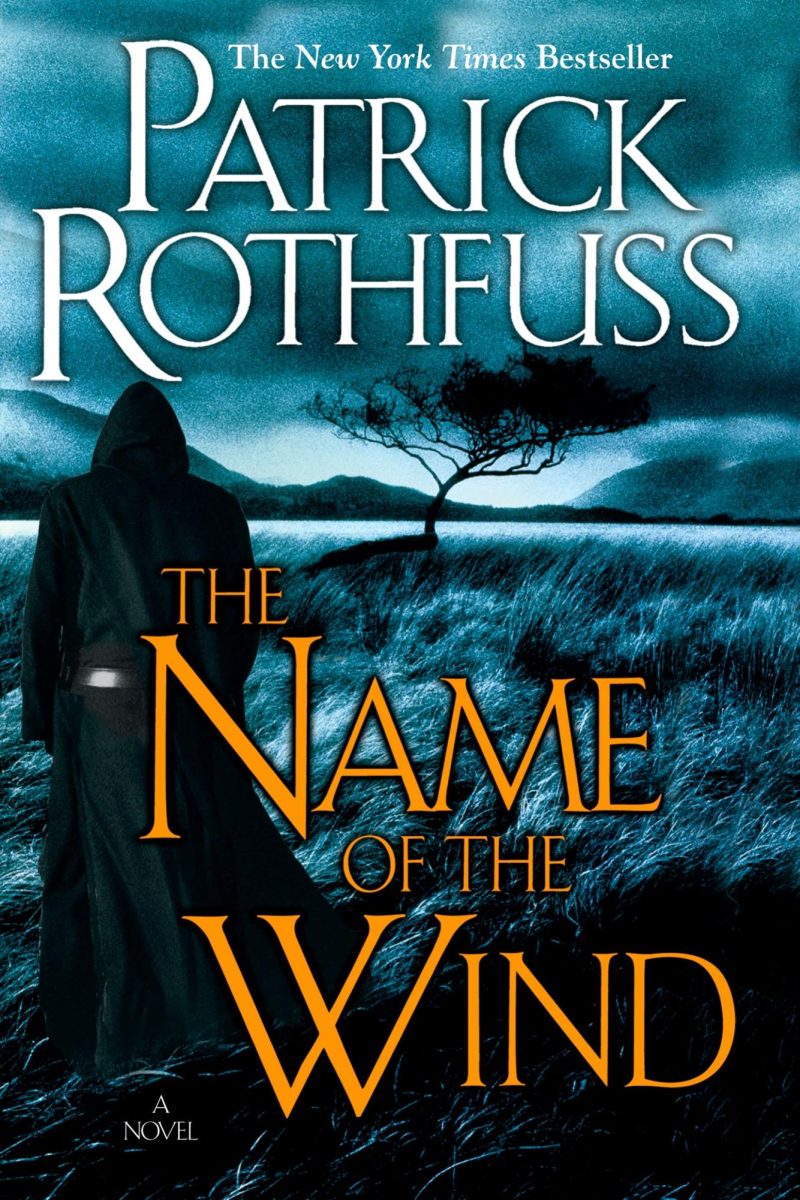
Patrick Rothfuss’ “The Name of the Wind” is a high-fantasy novel and the first installment in The Kingkiller Chronicle, a planned trilogy that follows the legendary wizard, musician and adventurer Kvothe as he recounts the truth behind the myths surrounding his life. More than just another fantasy novel, it is a story about memory, loss and how legends are born.
That setup alone is what pulled me into “The Name of the Wind.” It doesn’t begin with a war or an action scene designed to grab the reader’s attention. Instead, it opens with a quiet mystery that slowly unfolds, which surprised me in the best way because I expected a much more traditional fantasy opening.
The novel follows Kvothe as he recounts his life story over the course of three days to a traveling scribe known as Chronicler. What unfolds is not merely an adventure, but a layered coming-of-age story about how an orphaned performer becomes one of the most legendary figures in his world. His journey takes him from a traveling acting troupe to surviving alone on the streets of Tarbean before eventually earning a place at the University, where magic, reputation and survival all collide.
One of the parts that stood out the most was Kvothe’s time in Tarbean. It felt uncomfortable in a way that actually worked for the story. He goes from being a gifted child surrounded by music and family to basically having nothing. Those sections slowed the book down, but they were important because they show just how far he had to climb before he became the legend that strikes fear into the heart of anyone who mentions his name.
At the University, the book really opens up. The magic system in “The Name of the Wind” is split into a few different branches, but the two most important are Sympathy and Naming. Sympathy is the more structured system and is closest to what most readers would think of as “magic,” but it is actually built on logic and energy transfer rather than anything mystical. It works by creating a mental link between two objects and transferring energy between them, which means everything has rules, limitations and consequences. It feels almost scientific, and that made the magic scenes more intense because mistakes actually matter. At first, I found it a little overwhelming because of all the terminology, but once it starts to make sense, it becomes one of the most interesting parts of the book.
Naming, on the other hand, is completely different. Instead of rules and calculations, it is based on understanding the “true name” of something in a deeper, almost spiritual sense. Very few people can do it, and even fewer understand how it actually works, which is why it feels so mysterious throughout the story. Elodin — Kvothe’s professor — represents this side of magic, and his teaching style reflects that chaos. He rarely explains things directly, which makes him both frustrating and fascinating to read.
Together, these systems show a clear divide in the world: one is logical and controlled, while the other is instinctual and unknown. That balance is part of what makes the magic in the book feel so unique compared to other fantasy novels.
Kvothe causes mixed feelings but in a good way. He is clearly talented in almost everything he does, especially music and magic, but he is also stubborn and makes decisions that create a lot of his own problems, such as refusing to back down from his rivalry with Ambrose, a wealthy student who constantly undermines him. There were moments where I understood his frustration and other moments where I felt like he was making things harder than they needed to be, which made him feel more real than a typical “chosen one” character.
Denna is another character who stood out in “The Name of the Wind,” mainly because of her elusive and mysterious nature. She is a wandering young woman Kvothe meets multiple times throughout his journey, and she never stays in one place long enough for him—or the reader—to fully understand her. Unlike most characters in his life, she doesn’t come from a clearly defined background that is fully explained, which adds to her mystery. For Kvothe, she becomes someone he is constantly drawn to and searching for, even when he knows very little about her or where she is headed. Every time she appears, there is a sense that Kvothe is slightly behind her, unable to fully figure her out. One thing that might turn some readers away is the pacing. The book is slow in several sections, especially during Kvothe’s time at the University. There are long stretches where not much “big” plot progress happens, and if you are expecting constant action, it might feel like nothing is moving forward. Another thing worth mentioning is that the series is still unfinished. Rothfuss has not released the final book, and there is still no confirmed release date, even though there has been ongoing discussion about its progress. That definitely changes how you read the story because you are investing in something without a clear ending. Normally, I would be hesitant to recommend an unfinished series, especially one that has been waiting this long for its conclusion. However, I never felt like my time reading “The Name of the Wind” was wasted because the journey itself is so compelling that it stands on its own, even without a true ending.
With that said, “The Name of the Wind” works really well on its own. What stuck with me most was not just the plot, but the atmosphere and the way the story is told. It feels slower and more detailed than most modern fantasy I have read, but that is also what makes it memorable.
For a summer read, or just something to get fully absorbed in, I would still recommend it.
Rating: 9.5/10