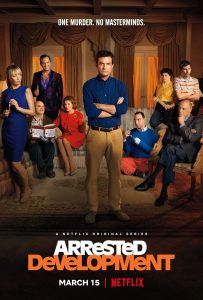
 A frozen banana stand burns to the ground. A magician loses a hand. A family yacht disappears. Somehow, these are just a few of the disasters facing the Bluth family in “Arrested Development,” the cult-classic sitcom that turns dysfunction into an art form.
With so many shows competing for viewers’ attention, choosing what to watch can feel overwhelming. I returned to “Arrested Development” while looking for something new to binge and was reminded why the series has remained a fan favorite more than 23 years after its debut.
Originally airing on Fox in 2003, “Arrested Development” follows Michael Bluth as he attempts to hold his eccentric family together after his father is arrested for financial crimes. As the family business collapses and legal troubles mount, Michael is forced to navigate increasingly absurd situations caused by his self-centered relatives, including his manipulative mother, clueless brother and wannabe magician sibling.
“Arrested Development” remains one of the smartest and most densely packed sitcoms I have yet to see. While its rapid-fire humor and unconventional storytelling may not appeal to every viewer, the show’s sharp writing, memorable characters and endless running jokes make it one of television’s most rewarding comedies.
What immediately stood out to me most was the show’s writing. The show constantly rewards viewers who pay attention, making it one of the few sitcoms that genuinely improves on repeat viewings. Unlike most sitcoms, “Arrested Development” rarely settles for a single punchline. Instead, episodes are packed with callbacks and visual gags that often become funnier several episodes later. I found myself laughing just as much at jokes I had missed earlier as I did at the main punchlines.
Whether it’s Tobias’ endless misunderstandings, Gob’s failed magic tricks or the infamous banana stand, the show manages to connect seemingly unrelated moments in ways that feel clever rather than forced.
The cast also plays a major role in the show’s success. Jason Bateman delivers an excellent performance as Michael Bluth, serving as the show’s straight man while the rest of his family creates chaos around him. His frustration often mirrors the audience’s, making him an effective anchor for the increasingly ridiculous situations unfolding around him.
Meanwhile, Will Arnett nearly steals every scene he appears in as Gob Bluth. His overconfidence, incompetence and complete lack of self-awareness consistently create some of the show’s funniest moments. Jessica Walter’s portrayal of Lucille Bluth is equally memorable, delivering sarcastic one-liners with perfect timing, while David Cross and Tony Hale help round out one of the strongest ensemble casts in sitcom history.
Another strength of the series is its unique presentation. Unlike many sitcoms of its era, “Arrested Development” does not rely on a laugh track. Instead, the show uses quick editing, visual humor and narration from Ron Howard to deliver jokes at a rapid pace. Howard’s narration often provides some of the funniest moments in the series, correcting characters or highlighting the absurdity of a situation in ways that make already funny scenes even better.
My biggest criticism comes from the show’s later seasons. While the original Fox run remains consistently excellent, the Netflix revival struggles to recapture the same energy and chemistry that made the first three seasons so successful. The writing is still clever, but the storylines often feel more complicated and less focused. The later seasons are far from terrible, but they never quite reach the heights of the original run.
What impressed me most about “Arrested Development” is how well it still holds up today. Many sitcoms lose some of their appeal once viewers know the jokes, but I found the opposite to be true here. Despite some seasons being weaker in the show’s later years, “Arrested Development” remains one of the smartest and funniest sitcoms I’ve ever seen. Its clever writing, unforgettable characters and incredible replay value have earned it a place among television’s greatest comedies. For viewers willing to keep up with its rapid-fire humor, “Arrested Development” is an easy recommendation.
Rating: 9/10