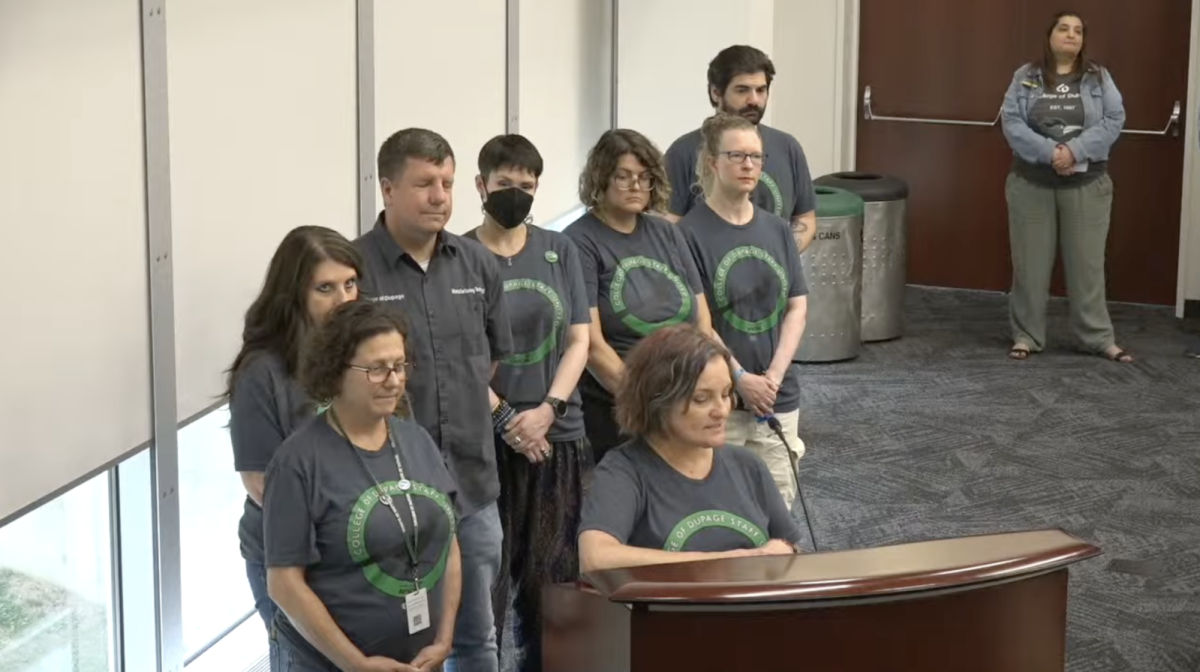
Introducing herself in her new role, Sue Kerby, succeeded the late Maren McKellin as manager of Field Studies, Study Abroad and Global Education. McKellin, a longtime COD administrator, died unexpectedly in May after more than 30 years at the college.
Kerby also addressed support for classified staff currently negotiating a new labor contract. Kerby said employees deserved hiring practices, job descriptions and compensation that accurately reflect the work they execute and called on the college to demonstrate its “culture of care” through actions as well as words.
The theme of the college’s “culture of care” stayed persistent throughout the board meeting, as former COD students urged trustees to reconsider the handling of Shannon Delgado’s administrative case.
During the June 25 Board of Trustees Meeting, Delgado came forward about putting on paid administrative leave without due process. Delgado was put on leave on Feb. 20. without any notice given.
“I was removed from my duties without notice, explanation or the ability to present information on my behalf.” Delgado stated during an interview with The Courier.
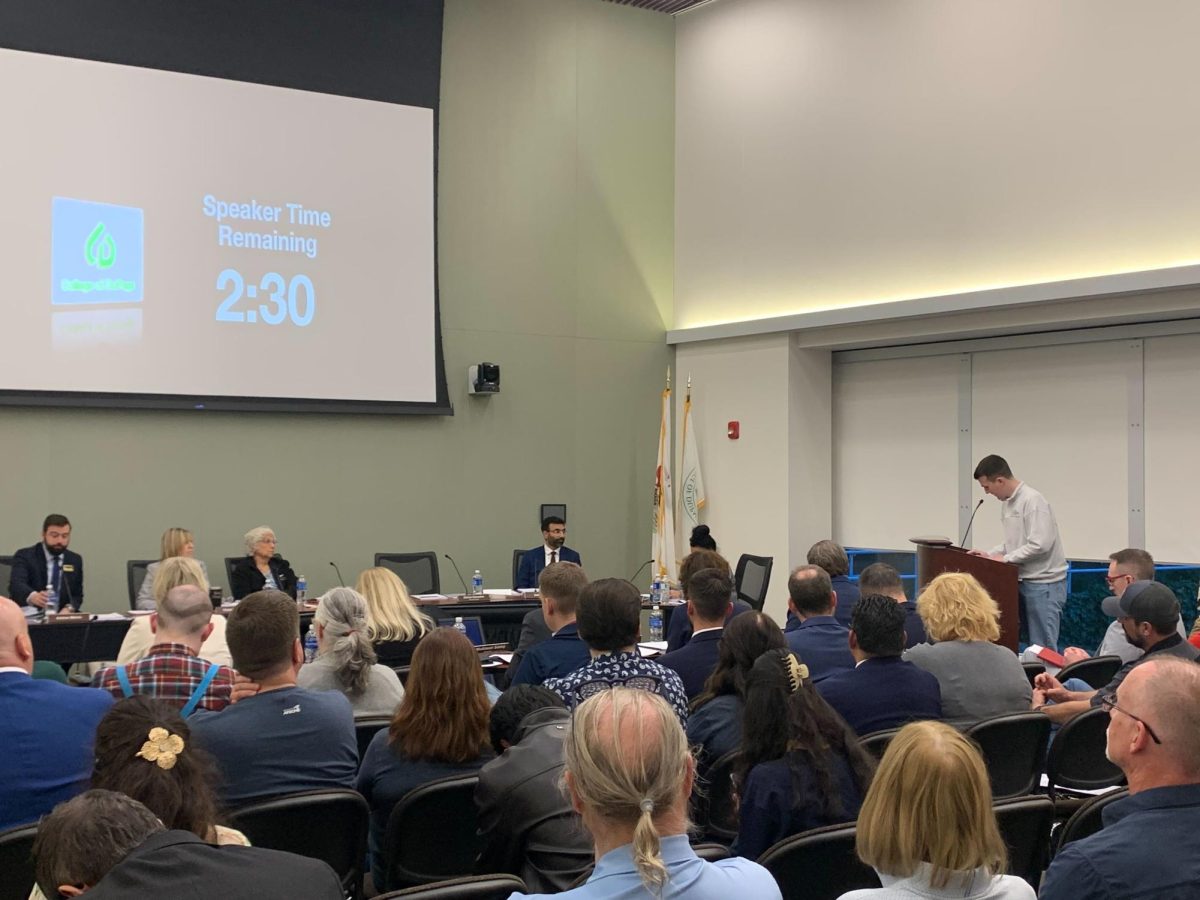
A “once-in-a-lifetime educator” is how Pamela Rivera described Delgado. During public comment at the July 16 Board of Trustees meeting, Rivera said Delgado spent more than a decade building opportunities for future educators and argued that the college’s handling of the situation failed to reflect the “culture of care” it promotes.
Another former student and 2024 commencement speaker, Stephanie Chavez, urged trustees to review the process regarding Delgado’s administrative leave “thoroughly, fairly and transparently.” Speaking on her character, Chavez told the board Delgado played a central role in her success as a student and as an aspiring educator.
Public comment also included criticism of trustees’ behavior during board meetings.
Angel Nance, recognized as a 35-year COD employee and member of the classified staff bargaining team, addressed the criticism that public commenters at the June 25 Board of Trustees meeting received for not respecting the process and people. Nance urged trustees to provide the same respect by giving their full attention, by putting away electronics, avoiding side conversations and actively listening during public comment.
“We ask members of the board to show the same respect you are asking of us,” Nance said. “In fact, we ask members of the cabinet and all those in attendance to demonstrate a culture of care by doing the same.”
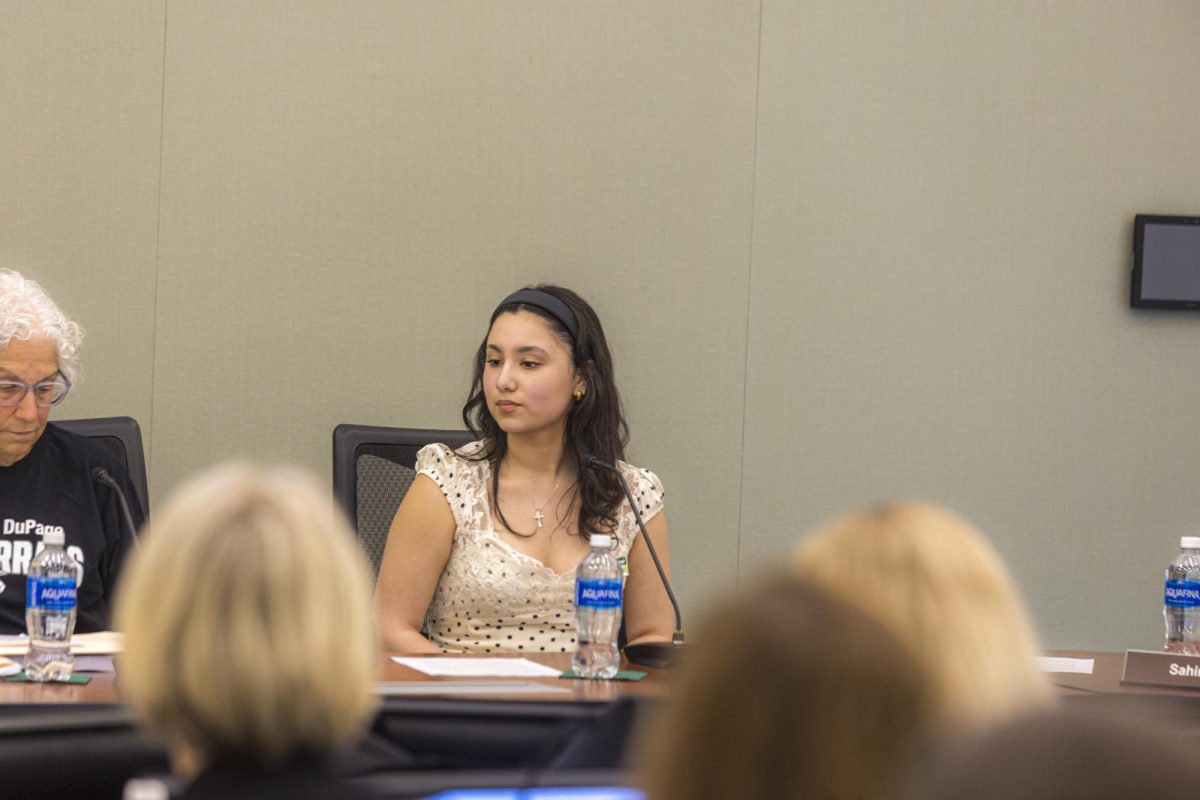
Student Trustee Danna Gonzalez spoke up about the “culture of care” during her report. She highlighted what she described as a gap between the college’s “culture of care” and students’ awareness of available resources.
Referencing data presented during the June Board of Trustees meeting, Gonzalez noted that only 7% of the Tuition Gap Fund was used in 2025. According to the COD Scholarships Website, The Tuition Gap Fund is “to assist students who are in need of additional funding due to the increase in tuition.” She questioned why many students are unaware of the services COD provides, such as tutoring, textbook loans, the Fuel Pantry and advising.
“As we move into the new school year and embrace our strategic long-term plan, I urge every faculty member, administrator, staff person and student to make one commitment—to inform students about resources we have,” Gonzalez said.
The emphasis on informing students about available resources aligned with one of the board’s presentations of the evening. After Gonzalez’ report, trustees reviewed a draft of the college’s 2026-2031 Strategic Long-Range Plan (SLRP), which prioritizes improving student access. Vice President of COD, Dr. Keegan Newkirk; Vice President of Analytics, Strategy and Research Nick Branson and faculty member Sarah Butler, gave an overview of the plan.
The SLRP will serve as the framework for guiding the institution’s priorities over the next five years. As of now, they are setting up five focus areas and will later implement specific strategies to achieve these goals.
The five focus areas include: student access and success, innovation, learning and workforces, people and culture, institutional effectiveness and community engagement.
For students, the plan aims to simplify the college experience by reducing barriers, expanding academic and support services, improving retention rates and creating clearer pathways to careers and university transfer. The proposal also places a greater emphasis on work-based learning after feedback showed businesses are looking for stronger workforce pipelines.
The priority in the Strategic Long-Range Plan for workforce development was reflected in a presentation on Innovation DuPage, the college’s nonprofit business incubator and accelerator that supports entrepreneurs in the region. Vice President of Workforce Education and Community Education Joseph Cassidy, and Managing Director of Innovation DuPage Dan Facchini provided an update after seven years of Innovation DuPage.
They highlighted the incubator’s role in strengthening the local economy, creating jobs and positioning the college as a hub for entrepreneurship and workforce development. They also noted that small businesses supported through Innovation DuPage often hire COD students and give back to the college and community.
After seven years, there are more than 400 companies in residence, approximately 200 active members who represent $67 million in annual revenue, more than 1,000 full and part-time jobs, and 68% representation of women and/or minority businesses. They have also provided $900,000 in scholarships. Looking ahead, the organization plans to expand opportunities for students and closer collaboration with the college’s work-based learning initiatives.
The trustees will meet next on August 27 in the Student Service Center room 2200. Meetings are open to the public and agenda meeting details are posted 48 hours in advance on the COD website.