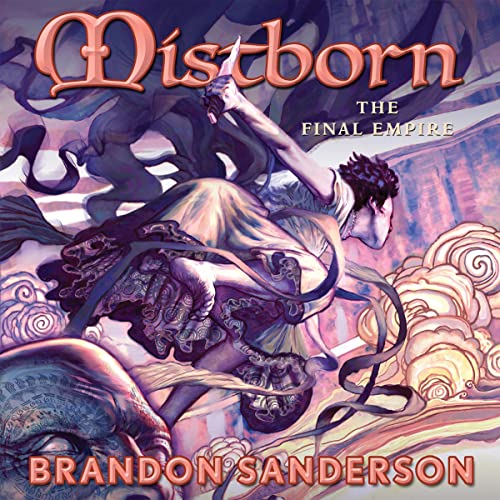
Darkness settles in, mist coils through the streets. Suddenly, a human-like figure bursts from the fog. This is the world of “Mistborn: The Final Empire,” the first book in Brandon Sanderson’s original fantasy series.
While its intricate magic system and slower opening may frustrate some readers, “Mistborn” ultimately became one of the most immersive and addictive fantasy novels I’ve read in a long time because of its atmosphere, character development and constant tension throughout the story.
Set in a dystopian world blanketed in ash and mist, the story follows Vin, a skaa thief struggling to survive under the oppressive rule of the immortal Lord Ruler. After being recruited by the charismatic Kelsier, Vin becomes involved in a dangerous plot to overthrow the empire. Alongside the rebellion, Sanderson introduces Allomancy, a magic system where certain characters ingest and “burn” metals to gain abilities ranging from enhanced strength to emotional manipulation. Most characters only have one ability, but the rare and far more dangerous “Mistborn” possess all of them.
What immediately stood out most was the atmosphere. The ash-filled skies, mist-covered streets and constant fear created by the Lord Ruler made the world feel tense almost all the time. The combination of the oppressive setting and the manipulation of the nobility created a nerve-racking atmosphere where everything constantly felt like it could collapse at any moment. Every chapter made me want to keep reading just to see what would happen next, even when I should have been doing something else.
At its core, “Mistborn” is a compelling underdog story following a group of unlikely rebels as they attempt to challenge a deeply entrenched system of control. The rebellion in “Mistborn” feels more like the French Revolution than a traditional fantasy uprising, with class warfare, political chaos and the violent collapse of an oppressive system shaping the entire story. The skaa’s treatment by the nobility also made the world feel much darker and more believable than a lot of fantasy books I’ve read such as The King Killer Chronicles and The Dresden Files .
Sanderson’s strongest ability lies in his creation of immersive worlds while still developing layered and believable characters. Vin’s growth throughout the novel was one of my favorite parts of the story because watching her slowly overcome her distrust and become more confident felt natural instead of forced. The dynamic between Vin and Kelsier also stood out as one of the most compelling mentor-mentee relationships I’ve read in fantasy. Kelsier’s charisma balances Vin’s quieter and more cautious personality extremely well, and their relationship made me much more emotionally invested in the rebellion itself.
My biggest issue with the novel was the pacing in the opening chapters. The first part of the book spends so much time explaining the world and magic system that it occasionally slowed the momentum for me. The magic system was also difficult to fully understand at first because Sanderson introduces a large amount of terminology and rules very quickly. I occasionally had to reread sections to fully understand what certain metals actually did. However, once I became more familiar with the system, it eventually became one of the most creative and strategic parts of the novel’s action scenes.
For readers hesitant to commit to Sanderson’s massive Stormlight Archive series, where each installment is over 1,000 pages long, “Mistborn” offers a much more accessible entry point into Sanderson’s work, which I would strongly recommend even to readers who are not usually interested in fantasy. Despite some slower pacing early on, the story becomes almost addictive once the plot fully starts moving.
As reported by The Hollywood Reporter, Apple TV+ has secured the rights to Sanderson’s Cosmere universe, his interconnected fantasy universe where different planets contain their own cultures, histories and magic systems, with “Mistborn” currently in development as a feature film.
Overall, “Mistborn: The Final Empire” exceeded my expectations and quickly became one of my favorite fantasy novels. Despite its slower opening and occasionally overwhelming magic system, the atmosphere, character relationships and constant tension made it incredibly difficult to put down. For readers interested in darker fantasy stories focused on rebellion, political conflict and immersive worldbuilding, “Mistborn” is an easy recommendation.
9/10