


Editor’s Note: This piece was written in companion with our piece about the new PeerCare service COD is offering. To learn more about PeerCare, please read our other piece.
The College of DuPage (COD) is facing a shortage of mental health counselors, alongside a nationwide shortage that is limiting services for students. The United States Bureau of Labor Statistics predicts a deficit of 74,000 social workers in the next decade, according to Columbia School of Social Work. Affecting schools and mental health services, this shortage was driven by pandemic burnout, low pay for counseling services and high demand. COD is brainstorming ways to address this shortage.
There are 10 counselors on staff for the entire 25,000 students at COD for 2,500 students per counselor. Because of the high demand for mental health services from students, COD formed a contract with Uwill. Uwill is a telehealth service, meaning it provides mental health services via phone call or Zoom for more accessibility. The contract between COD and Uwill states students utilizing Uwill get the first 12 sessions for free. To learn more about this program, contact COD’s counseling service.
With finals coming up, the lack of mental health counselors have a direct impact on student performance.
COD students, such as Adam Ali, notice the limited mental health services the most during the stress of major exams or when trying to juggle life with schoolwork.
“Some very common stressors are studying for midterms and finals,” Ali said. “I had a financial accounting final on the same day as two other finals for psychology and marketing. So I definitely [felt] overwhelmed.”
Despite these stressors, Ali said he was unaware of COD’s mental health services.
“Definitely try having [counseling services] in more of the main areas where students walk,” Ali said.“[Places with] open areas and lounges where students study and they’re walking through.”
COD mental health counselor Dennis Emano makes it his mission to spread awareness. He reaches out by organizing mental health awareness events and talking about mental health to students.
“I’m worried about the shortage because it’s nationwide. It’s not just our area,” he said.
Emano acknowledges there are still changes to be made to help COD’s mental health services.
“There’s definitely room for improvement,” Emano said. “We still have our busy periods when we have difficulty accommodating our students. Sometimes students want to get in right away. They want to see a counselor and want an appointment [as soon as possible]. We’re not always able to accommodate them.”
Because of the social worker shortage impacting COD, students have to wait weeks for an appointment. Getting in to see a counselor can be particularly difficult during midterms or towards the end of the semester when students feel more stressed.
A program COD provides to combat the counseling shortage is PeerCare. It is a peer support program for students to meet with trained students and talk about mental health problems. Currently, appointments for PeerCare are made by contacting the counseling department, and appointments are available Wednesdays from 10 a.m. to 12 p.m. and 1 p.m. to 3 p.m.
“Sometimes it’s easier to talk to your peers,” Emano said. “[They] understand what it’s like to be a student, and [they’re] easier to talk to and more relatable. That’s the whole idea behind the PeerCare program.”
The PeerCares program has recently started as counselors are required to find, hire and train volunteers. “It would be helpful if we had more counselors who would be available to see students,” Emano said.
Programs, like Uwill and PeerCare, help by being more accommodating to student schedules while giving counselors more time to work on projects to spread mental health awareness.
“There are also other things that we’re working on, aside from just seeing students directly,” Emano said. “We’re doing programming, making decisions and working with committees involving mental health. We have to make decisions about how to spend the grant that we received. That would be related to mental health concerns, but that’s kind of time-consuming.”
COD is involved in a committee that decides on the funding for the Mental Health Early Action on Campus Act (MHEAC).The MHEAC gives money to schools to be able to provide mental health services to students. This law was formed in 2020 to address a lack of mental health support on college campuses. It funds training, peer support and any partnerships the college might be related to, such as Uwill. The five goals of the MHEAC are to identify student needs, increase access to clinical services, provide peer support training, offer mental training to the staff/facility and reduce administrative barriers, which is improving access to services.
Because of the MHEAC, colleges are expected to do whatever is in their power to spread mental health awareness and provide external services. Emano explained COD has to raise awareness about mental health and reach students who need counseling services for them to access, under the MHEAC.
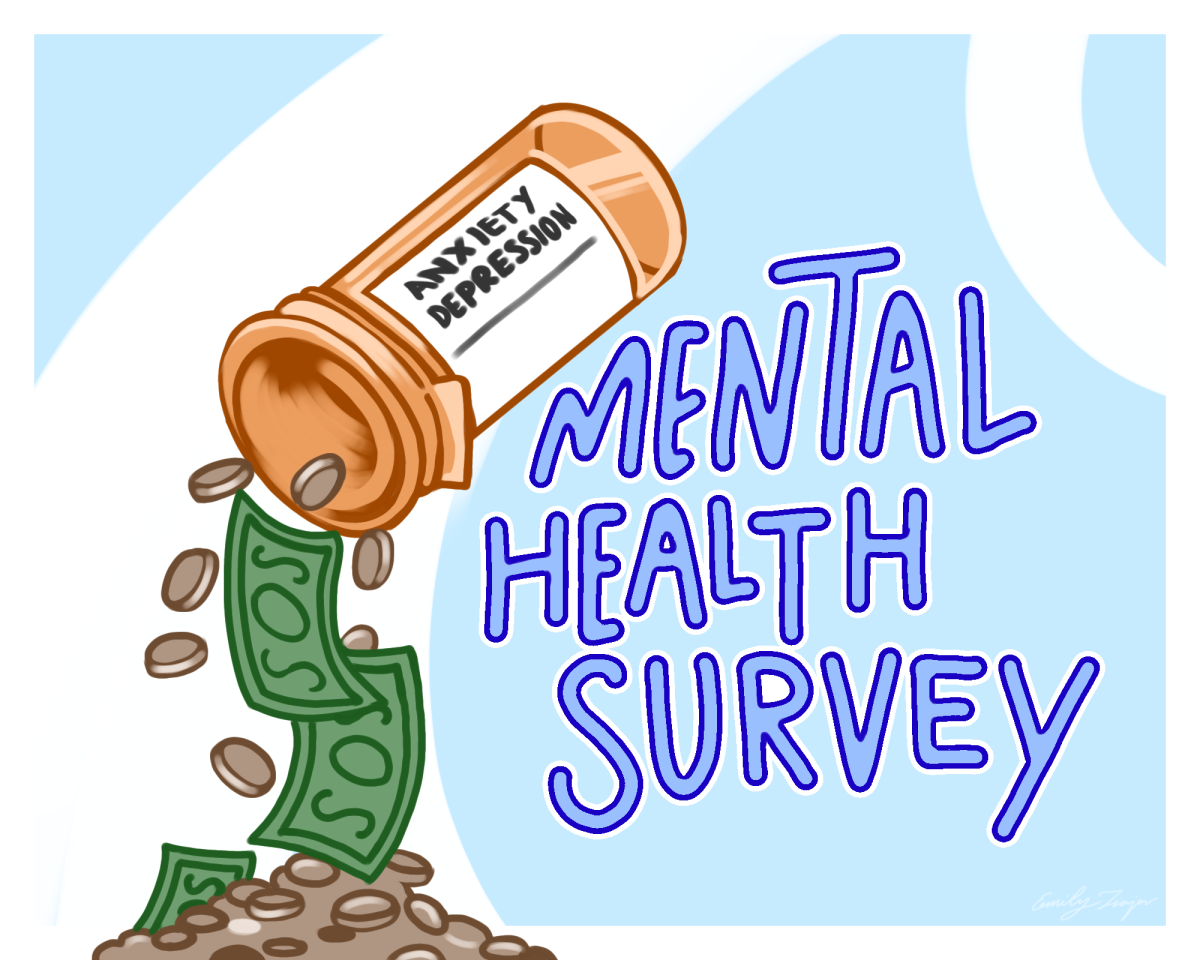
To spread awareness, the counseling department has to understand the mental health of students and how to help them. They do this by surveying the student body, Emano said. This is the fourth year that the department has sent a mental health survey on Mar. 30 to students’ COD emails.
“The survey was trying to get a better understanding of what COD students’ mental health is,” Emano said. “The more we can understand what concerns and what issues they’re struggling with, the more our office can try to meet those needs so we can create programming [and] events.”
According to the survey, around 80% of students said they struggle with anxiety, highlighting the scale of mental health concerns among COD students.
“I’m constantly talking about anxiety, and we need to talk about it,” Emano says. “Not just for the purpose of talking about it, but to talk about it in a way to normalize it so that people don’t feel like there’s a stigma with having anxiety and with seeking help for anxiety. We have to take away that stigma, so that people struggling with anxiety can get help.”
To schedule a meeting with any mental health service COD provides, contact COD’s counseling services by calling at (630) 942-3330 or visiting their office on main campus in SSC room 3341.


mike diver • Apr 18, 2026 at 9:44 pm
It is sad to hear that so many COD students (snow-flakes?) feel they need “counseling. I guess it is just a reflection on the entire Nation’s growth of disturbed youth.
During the early days of the existence of COD (1970’s) , most counseling and mentoring was done by us professors — and with great success. Now ?