The Humanities Department at College of DuPage (COD) invites students and community members to explore how knowledge moves across fields through Humanities Fest IX, a multi-day festival running from Feb. 25 – March 6 centered on the theme of “translation.”
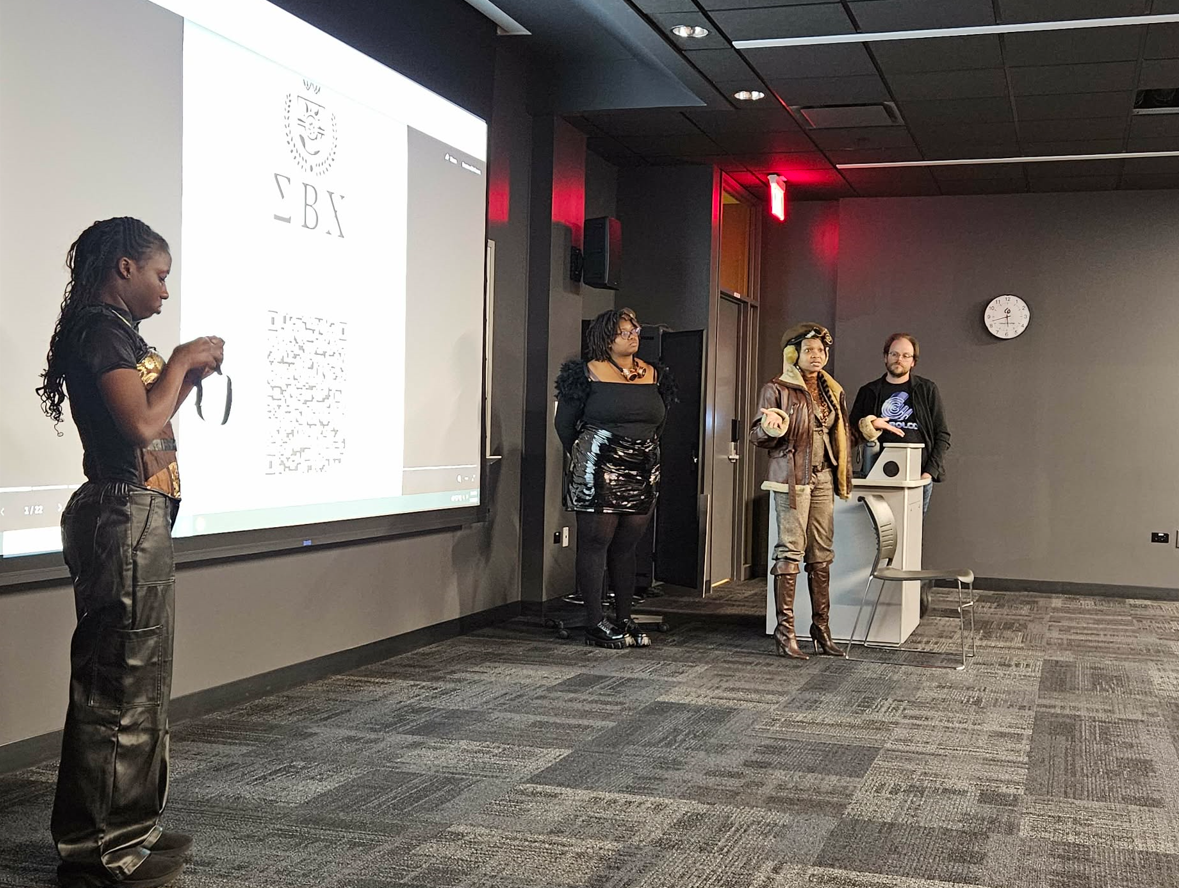
Now in its ninth year, the festival brings together faculty from different disciplines, from architecture and animal studies to philosophy and political science, to demonstrate how humanities thinking connects fields often seen as separate. Events include discussions, presentations and performances, and collaborations with the McAninch Arts Center (MAC). Julia diLiberti, Humanities Fest coordinator and COD humanities professor, said the festival was created to broaden campus understanding of what the humanities consist of and how they support other fields.
“We wanted to have a place here where people could understand what the humanities are more broadly, and we wanted to make our point that the humanities contribute to the understanding of every discipline,” diLiberti said.
This year’s theme, “translation,” highlights how knowledge is communicated, adapted and shared across academic specialties, as well as among faculty and students. This year’s theme emphasizes how faculty make specialized knowledge accessible to a wider audience, she said.
“I like this idea of translation because it’s not just translating your discipline to ours, but how do we as faculty translate our knowledge in ways people can receive it,” diLiberti said.
Another coordinator, COD associate professor Adam Fotos, emphasized that the humanities have historically developed alongside STEM fields. Sessions aim to show students that these disciplines remain interconnected in their shared roots.
“From the beginning, science and art have been closely pursuing similar ideas but in different ways as they became more and more specialized,” Fotos said. “We are just trying to understand the world.”
At a community college where career preparation is often emphasized, the festival highlights the role of the humanities in shaping how students understand the world and themselves. Timothy Clifford, coordinator and COD associate professor, believes humanities education offers students more than just career preparation.
“Since we are situated in a community college, we’re often asked about the application of skills, what kind of skills students have, and how they [can] apply them to be better employees,” Clifford said. “But the bigger benefit of the humanities for our students is learning that they’re more than just workers.”
The Humanities Fest differs from traditional academic conferences. Coordinators share with faculty details of the theme, and those who choose to participate can create presentations on topics relating to the theme. By offering an informal and accessible environment, it invites students with different academic interests to come together to engage in conversations and ideas. Joshua Price, coordinator and associate professor, said it was intentionally designed to be accessible and engaging rather than academic or technical.
“It’s not a rigorous academic conference; we’re not reading papers,” Price said. “It’s in the spirit of the community and what would be interesting for the students.”
Organizers said the festival centers on exploring ideas and creative expression for students who may not yet see themselves reflected in academic spaces. Exposure to varied perspectives, Price said, reinforces that every student’s voice has value. Price said that encountering new ideas in college is a key part of college life, and Humanities Fest seeks to promote this.
“I think it’s a rite of passage that you go to college and get to hear various viewpoints on subjects that slightly interest you,” Price said. “Then you find out that there is something fascinating, so I hope students do find something that attracts their attention at the fest.”
All Humanities Fest IX events are free and open to the public unless otherwise noted. Additional information and the full schedule are available on the COD event calendar.