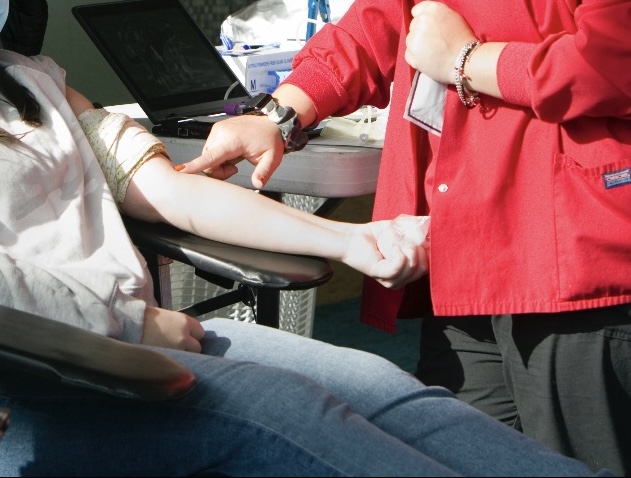
The American Red Cross partnered with COD Cares and the COD Student Nurses Association to host a blood drive on campus for the community to donate. The drive was seeking donations from African Americans, Asian Americans and Latino communities whose blood types are urgently needed.
According to an American Red Cross report published in January 2026, a severe blood shortage has been declared after its U.S. blood supply fell about 35% in one month, driven by flu outbreaks and winter weather disruptions. Blood collected through Red Cross drives is processed and distributed based on hospital demand.
COD Cares reported roughly 70 participants between pre-registered donors and walk-ins, with final totals expected after processing. Last year, COD Cares managed to collect 43 units of blood. The preparation guidelines provided by the American Red Cross, such as hydration and iron-rich foods, help ensure a smooth donation process. Once the blood has been collected, the Red Cross staff oversees the donors and rewards them with snacks, a $20 e-gift card and rest time.
A key focus of the drive was encouraging donors from African American, Asian American and Latino communities, whose blood types and antigen profiles may more closely match patients from similar backgrounds. Bryanne Jordan, an American Red Cross mobile phlebotomist working with the drive, said shortages are especially pronounced among donors whose blood may be uniquely suited for certain patients.
“We’re technically always in a shortage of blood,” Jordan said. “Especially in communities of color, people don’t always know the need or the impact. But those donors are really important, especially for conditions like sickle cell, where closely matched blood makes a big difference.”
For COD Cares, the drive represents a long-running commitment to community engagement and volunteer services on campus, DiPiero, manager of COD cares explains. The volunteer initiative, active for more than 12 years, coordinates projects that connect the campus with local needs. The program partners with the American Red Cross to host four drives each academic year, typically two per semester.
“One of the reasons the American Red Cross spoke to us is that it’s both local and national,” DiPiero said. “If patients at Elmhurst Hospital need blood, the Red Cross can provide it, but they can also respond to disasters or needs across the country. It’s a wider spread.”
The COD Student Nurses Association played a key role in outreach and volunteer coordination during the event, helping recruit donors and supporting operations on site. For many student volunteers, the drive also provided a chance to experience blood donation personally while encouraging others to participate. Hijab Shamim, a COD nursing student and association member, donated blood for the first time during the event.
“I have worked in the surgery center, and a lot of people will fear the needle size. I didn’t even think of that because I’ve seen it like so many times. I’m almost desensitized,” Shamim said. “But when it was actually me in the seat, I was like, ‘Dang, this thing’s kind of big.’ So it was nice because I usually don’t get to be on the other side.”
Volunteering at events like the blood drive can offer new perspectives and hands-on experience for students, DiPiero said. Those opportunities also support the college’s broader commitment to community engagement.
“As a community college, we take the community very seriously,” DiPiero said. “The community supports us, and we want to give back in more ways than just education. We just want to help our own.”
Organizers expect to continue quarterly blood drives, with the next scheduled for April. If you’re interested in donating blood but can’t make it to one of the drives, appointments can be set up through the American Red Cross website. Each donation can save up to three lives, according to the American Red Cross. Those interested in participating in future drives or in volunteering opportunities can find them through the COD Cares website.